

Home / Safety / Thermal Electrical Inspection
Thermal Electrical Inspection
Heat and smell are the two symptoms that should never wait. An inspector’s list is not an opinion, and the fastest way through it is to correct the items and get them re-inspected.
Thermal Electrical Inspection in O’Fallon and across St. Charles, St. Louis, Lincoln and Warren counties.
Clint Ehman, seventeen years in the trade, running Infinity Electric out of O’Fallon since 2022.
5.0 from 94 Google reviews · BBB A+ since 2022
What this work actually involves
The fault is located with a meter and a plan rather than by swapping components until something changes.
The measurement happens before the number. You hear what the reading says in plain words, then what it means, then what it will take to fix. Where the fix is small you are told that rather than sold past it.
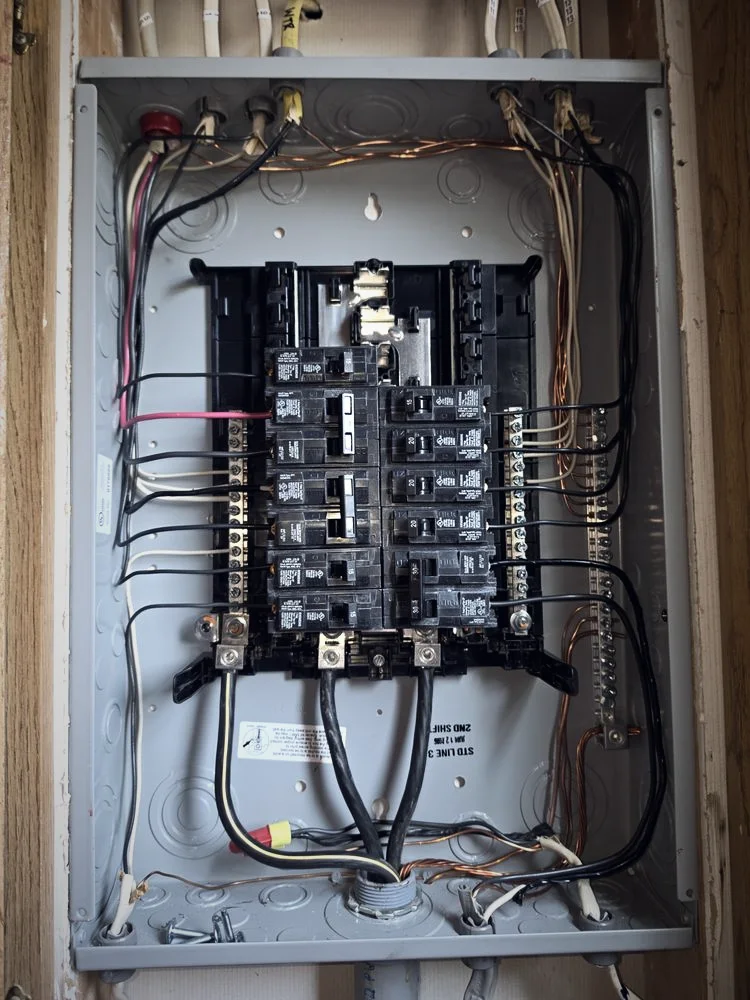
Permits get pulled where the municipality asks for one, and the work is left ready for the inspector with the panel labeled. The same person does the diagnosis and the repair.
When people call about this
- Lights flickering on unrelated circuits
- An inspection report before a closing
- Half the house without power
- Warm cover plates
Why people choose Clint for it
What the reviews keep mentioning is being told what the problem actually was. That is what an owner-operated shop can do and a dispatch model structurally cannot.
Seventeen years in the trade, 5.0 from 94 Google reviews, and BBB accredited A+ since December 2022.
Where this is done
O’Fallon and the surrounding St. Charles County suburbs, out through St. Louis County and St. Louis City, and into Lincoln and Warren counties. Roughly a fifty mile radius.
See the full service area, or the rest of our safety & code work.
The symptoms that should never wait
Heat at a cover plate, a smell of hot plastic, and a breaker that will not stay set are the three that justify a same-day call. All three describe energy going somewhere it should not.
Flickering across unrelated circuits belongs in the same group, because it points at the service or the neutral rather than at one room.
How a fault is actually found
Diagnosis is a process of division. Measure at the panel, measure at the point of failure, then split the circuit until the fault is on one side of the split.
That is slower to describe than swapping parts and much faster in practice, because it ends with an answer instead of a list of things that were not the problem.
What an inspection covers and what you get
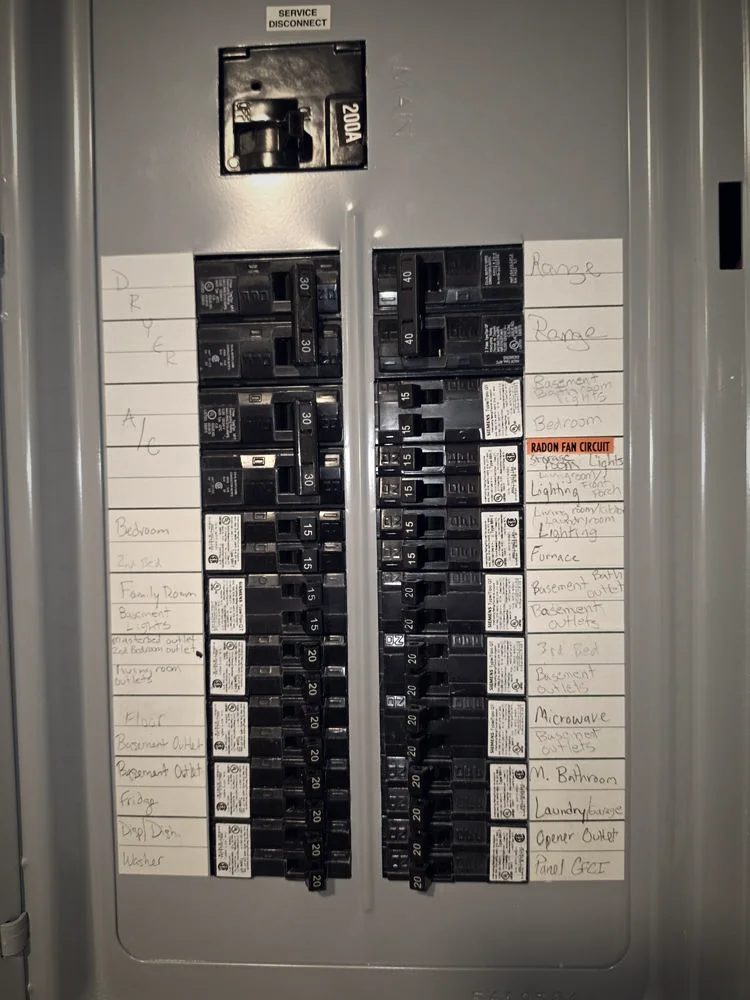
Grounding and bonding, protection in wet locations, panel condition with the cover off, terminations at large loads, device condition, and the specific hazards the housing stock here produces: aluminum branch wiring, knob-and-tube, obsolete panels.
You get a written list with readings, separated into what is a hazard, what is a code item, and what is simply old and working. Buyers, insurers and inspectors all ask for different ones.
What gets left behind when the work is done
A labeled panel, accessible junctions, the old parts if you want to see them, and a straight account of anything found along the way that was not part of the call.
Where something else was found, you get told what it is and whether it needs doing now, later or not at all. That third answer is a real answer and it gets used.
What makes this harder in older housing stock
Across this metro the recurring complications are predictable: no equipment ground, aluminum branch wiring from the mid-seventies, knob-and-tube buried in blown-in insulation, panels that have been added to several times, and splices in places the code has not allowed for decades.
Those turn a simple job into a decision about scope. The decision gets put to you with the reading behind it rather than made quietly and billed.
“Infinity came out for same day service after an electric line had been cut in my yard. He was able to locate and correct it very quickly, eliminating any risk of injury or additional power outage.”
Melissa Johnson · Google review
How the visit goes
- The call
What you are seeing, smelling or hearing, and when it started. Heat and smell move you up the day.
- The measurement
Reproduce the symptom, then divide the circuit until the fault is on one side of the split. Measurement at the panel and at the point of failure.
- The finding
What it was, with the reading. Including when the answer is one loose connection rather than the rewire you were braced for.
- The work
Correction scoped to the finding, permitted and re-inspected where the municipality requires it, and documentation you can hand to an inspector or a buyer.
What the job includes
- Reproducing the symptom before anything is replaced
- Measurement at the panel and at the fault
- A plain-words finding with the number that supports it
- Correction scoped to the finding, nothing bundled
- Permit and re-inspection where a municipality requires it
- Documentation you can hand to an inspector or a buyer
What it does not
- Replacing parts that test sound
- Opinions where a measurement is possible
- Work outside electrical, though we will say who to call
Plumbing, HVAC and structural work get a pointer to someone who does them properly. Finished work is in the gallery. To book, pick a day.
Related safety & code work
Thermal Electrical Inspection across the metro
The same job is not the same job in every part of this metro. Out of O’Fallon across thirty municipalities, where the permit process changes more than the work does.
St. Louis City
Century housing, its own permitting authority, and occupancy inspections that decide a lot of the calls.
Lincoln County
Rural properties where the panel is fine and the two hundred foot run to the barn is the actual job.
Warren County
Newer builds beside older farm properties, with outbuildings and well pumps that town panels never see.
The whole working radius is mapped on the service areas page.
Questions worth asking first.
Can you handle the items on my inspection report?
Yes. Send the report. The items get corrected, permitted where the municipality requires it, and re-inspected so the file closes before your closing date.
My lights flicker across the whole house. Is that urgent?
Potentially. A whole-house flicker, especially when a large motor starts, can mean a failing service neutral, which can damage equipment. That gets measured at the panel before anything inside is touched.
Half my house has no power. Is that a breaker?
Usually not. Losing roughly half the house is the signature of a lost leg of the service or a failing neutral, and it gets measured at the service entrance first.
What do your reviews say?
5.0 from 94 Google reviews, and A+ accreditation with the BBB held since 2022. The reviews are on the reviews page with links to where each was posted.
Who actually shows up?
Clint Ehman. Infinity Electric is owner-operated, so the person who answers the phone is the person who measures your panel and pulls the permit. There is no dispatcher and no commissioned salesman.
Get the measurement first.
The reading comes before the number, so you know what you are deciding about. Thermal Electrical Inspection in O’Fallon and across the metro.
Mon-Thu 8-5 · Fri 8-4 · Sat 10-3. Prefer to write it down? Write it here.