



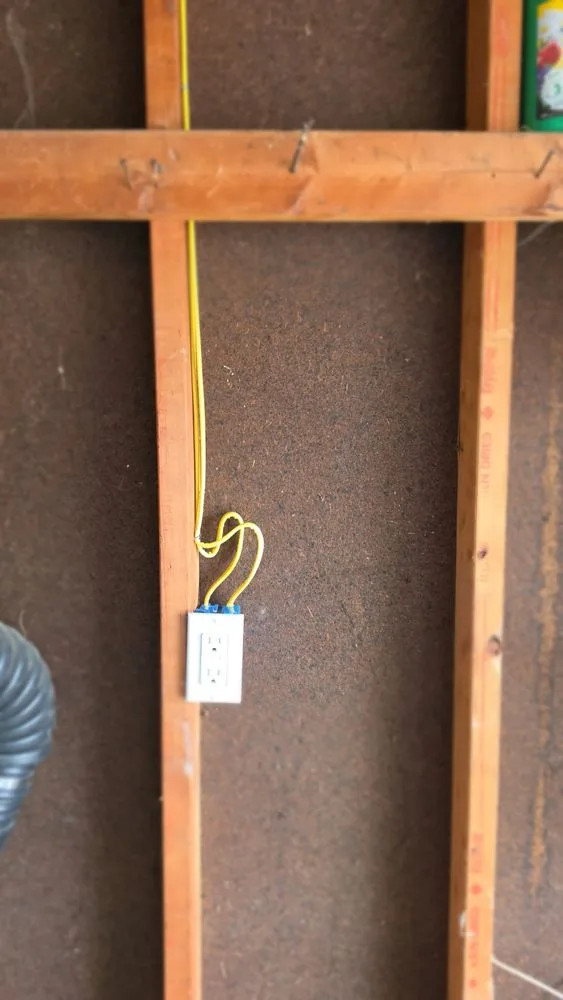
Home / Outlets / GFCI Outlet Installation
GFCI Outlet Installation
Receptacles are where a house’s electrical limits become visible. An outlet is the only part of the system most people touch, and it is where overloaded circuits show themselves first.
GFCI Outlet Installation in O’Fallon and across St. Charles, St. Louis, Lincoln and Warren counties.
One electrician, start to finish. Seventeen years in the trade and four running his own shop out of O’Fallon.
5.0 from 94 Google reviews · BBB A+ since 2022
What this work actually involves
Protection is matched to the location, which is what the code is actually asking for when it calls out a GFCI.
A number follows a measurement here, never a guess. You get told what the reading was and what it means before any work is agreed, including on the days when the answer is one loose connection.
Permitted and inspected where the address requires it, labeled at the panel, and done by the person who diagnosed it rather than handed down a chain.
When people call about this
- A tripping kitchen circuit
- Extension cords as permanent wiring
- Outlets with no ground
- A new appliance with no circuit
Why people choose Clint for it
What the reviews keep mentioning is being told what the problem actually was. That is what an owner-operated shop can do and a dispatch model structurally cannot.
Seventeen years in the trade, 5.0 from 94 Google reviews, and BBB accredited A+ since December 2022.
Where this is done
O’Fallon is home and the shortest drive. Beyond it, St. Charles County, St. Louis County, St. Louis City, Lincoln County and Warren County.
See the full service area, or the rest of our outlets & circuits work.
Backstabbed connections and the decade-later fault
A device can be wired by pushing conductors into spring holes in the back, or by landing them under the screw terminals. The first is faster and the second lasts. Spring contacts relax over years, and a relaxed contact arcs.
A great many intermittent outlets in houses of a certain age are exactly this, and the fix is to re-terminate properly rather than replace a device that was never faulty.
Dedicated circuits and why they exist
Some appliances do not share. A microwave, a disposal, a dishwasher and a refrigerator each expect their own circuit, and a kitchen wired to an older standard usually has fewer circuits than the appliances now in it.
That is why a kitchen breaker trips when the microwave and the kettle run together. It is not a fault; it is arithmetic, and a dedicated circuit ends it.
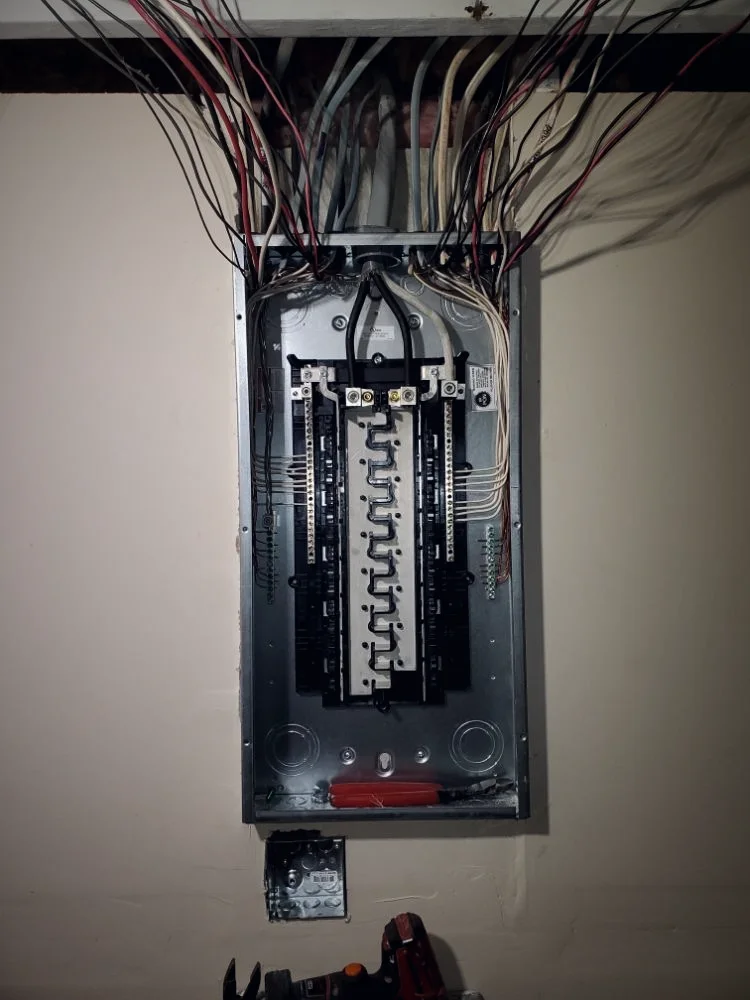
Where GFCI protection is required and why
GFCI protection watches for current leaving the circuit by a path other than the neutral, which is what happens through a person. It is required in the locations where water and ground are present: kitchens, baths, laundry, garages, basements, outdoors.
It can be a device at the outlet or a breaker at the panel, and which one is right depends on how the circuit is wired and how many outlets are downstream. A GFCI that trips repeatedly is reporting something real, and finding what is a diagnosis rather than a replacement.
What makes this harder in older housing stock
Across this metro the recurring complications are predictable: no equipment ground, aluminum branch wiring from the mid-seventies, knob-and-tube buried in blown-in insulation, panels that have been added to several times, and splices in places the code has not allowed for decades.
Those turn a simple job into a decision about scope. The decision gets put to you with the reading behind it rather than made quietly and billed.
Permits, inspections and why they vary here
Requirements genuinely differ across this metro. O’Fallon, St. Charles, St. Peters, the St. Louis County municipalities and St. Louis City each run their own process, and what one treats as a minor repair another permits and inspects.
Work that needs a permit gets one, and work that needs an inspection is left ready for it with the panel labeled and the junctions accessible. That matters most before a closing, when an inspector’s written item becomes someone’s negotiating position.
“Infinity came out for same day service after an electric line had been cut in my yard. He was able to locate and correct it very quickly, eliminating any risk of injury or additional power outage.”
Melissa Johnson · Google review
How the visit goes
- The call
What tripped, or what you want to plug in that there is nowhere to plug in.
- The measurement
Tracing the circuit to find everything already on it, then checking box fill, gauge and existing protection.
- The finding
Whether this is a new dedicated circuit or a device swap, and whether protection needs upgrading for the location.
- The work
Circuit run and terminated properly, devices installed tight rather than backstabbed, protection matched to location, and every outlet on the circuit tested.
What the job includes
- Tracing the existing circuit before anything is added
- Correct protection for the location, GFCI or AFCI as the code calls for
- Dedicated circuits where an appliance needs one
- Box fill and wire gauge checked and corrected
- Devices installed level and tight, not backstabbed
- Testing at every outlet on the circuit
What it does not
- Appliance installation beyond the connection
- Cabinet or countertop modification
- Low-voltage data unless it is part of the same job
Anything that is not an electrical problem gets identified as such and handed on. See finished work, or say what the house is doing.
Related outlets & circuits work
GFCI Outlet Installation across the metro
The same job is not the same job in every part of this metro. Five jurisdictions, five different sets of conditions, all worked out of O’Fallon.
St. Louis County
This is where the genuinely old wiring lives: cloth insulation, no equipment ground, fuse panels and the mid-seventies aluminum. Each has an accepted remedy rather than requiring a whole-house rewire.
St. Louis City
Fishing a wall is harder here and sometimes not possible, so the honest answer about opening one comes before the work rather than during it.
Lincoln County
Outbuildings count as separate structures in code terms: a disconnect at the building, a grounding electrode there, and a feeder sized for the distance.
The whole working radius is mapped on the service areas page.
Questions worth asking first.
Do I need GFCI everywhere?
Where the code calls for it: kitchens, baths, garages, outdoors and unfinished basements. It is the cheapest safety work in a house and the easiest to add.
Why is my outlet warm?
Heat at a device means a loose or backstabbed termination arcing, and it does not resolve itself. That one gets looked at promptly rather than scheduled out.
Can you add an outlet without opening the wall?
Usually, depending on framing, insulation and fire blocking in the cavity. You get a straight answer about which before the work starts.
Are you licensed and insured?
Licensed, bonded and insured, with workers compensation coverage, and accredited A+ with the BBB since 2022.
Where do you work?
Out of O’Fallon across St. Charles County, St. Louis County, St. Louis City, and Lincoln and Warren counties, roughly a fifty mile radius.
Describe the symptom, not the diagnosis.
That is usually enough to say what the visit involves before anyone is booked. GFCI Outlet Installation in O’Fallon and across the metro.
Weekdays 8-5, Fri to 4, Sat 10-3 · or describe it in writing.