Home / Safety / Electrical Overload Diagnosis
Electrical Overload Diagnosis
Code corrections are cheaper than the sale falling through. An inspector’s list is not an opinion, and the fastest way through it is to correct the items and get them re-inspected.
Electrical Overload Diagnosis in O’Fallon and across St. Charles, St. Louis, Lincoln and Warren counties.
Clint Ehman does the work himself. Seventeen years in the trade, Infinity Electric since June 2022.
5.0 from 94 Google reviews · BBB A+ since 2022
What this work actually involves
The fault is located with a meter and a plan rather than by swapping components until something changes.
Clint measures before he quotes. The reading comes first, then what it means, then the one repair that solves it. If the honest answer is smaller than what you called about, that is the answer you get, even when the bigger job pays better.
Work that needs a permit gets one, and work that needs an inspection is left ready for it. One person does the diagnosis and the repair, so nothing is lost between a salesman and a technician.
When people call about this
- Warm cover plates
- A burning smell near a panel or outlet
- A breaker that will not stay set
- Lights flickering on unrelated circuits
Why people choose Clint for it
A one-person shop cannot be in two places at once, so you get a real date instead of a window. What you also get is the same person every time.
Seventeen years in the trade, four of them on his own, 5.0 from 94 Google reviews and an A+ BBB accreditation since 2022.
Where this is done
Thirty towns across five jurisdictions, worked out of O’Fallon. The housing stock and the inspection process both change as you move across them.
See the full service area, or the rest of our safety & code work.
Inspection lists and closings
An inspection report is a to-do list with a deadline attached. The items get corrected, permitted where the municipality requires it, and re-inspected so the file closes before the closing date.
Requirements differ between St. Charles County and the St. Louis municipalities, which is worth knowing before a date is agreed.
Which symptoms are urgent and which are not
Heat at a device or panel, a burning smell, visible arcing, water in electrical equipment, or losing power to roughly half the house: those move to the front of the day, because each one means something has already failed or is actively failing.
A breaker that tripped once, a dead outlet, or a flickering fixture can be scheduled. Being told which category you are in is itself useful, and it is free.
Overload and short are different problems
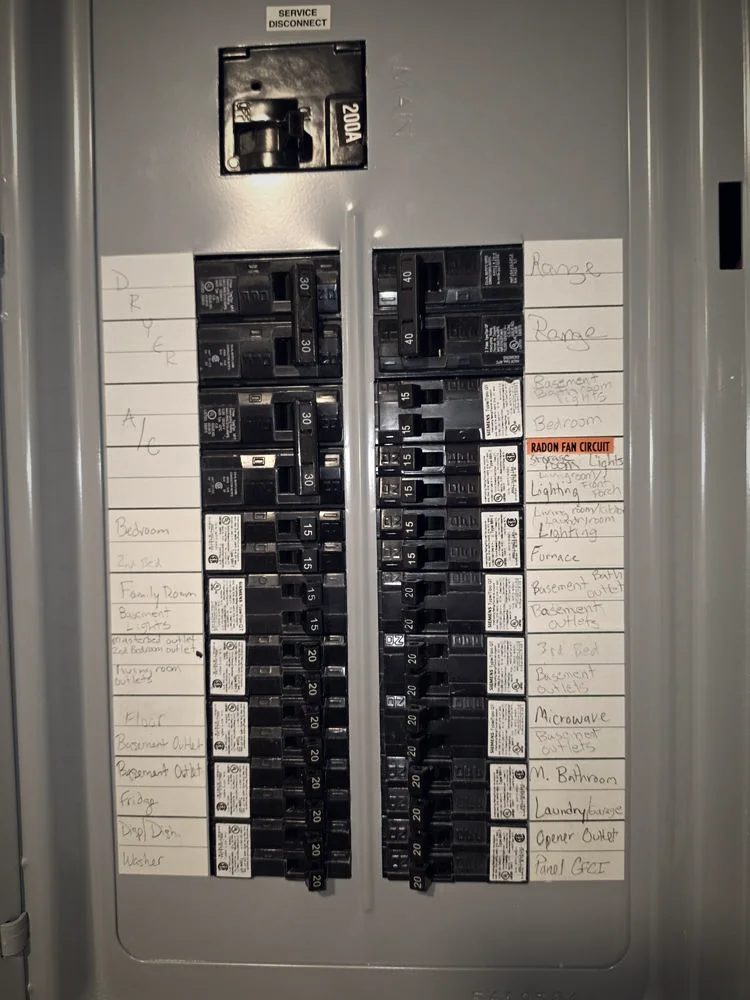
An overload trips after a delay because the total draw exceeds the circuit; a short trips instantly. Which one you have points at completely different work: a new circuit versus a repair.
Measuring the circuit’s real load under use settles it, and often the answer is one dedicated circuit for the appliance that keeps causing it.
What gets left behind when the work is done
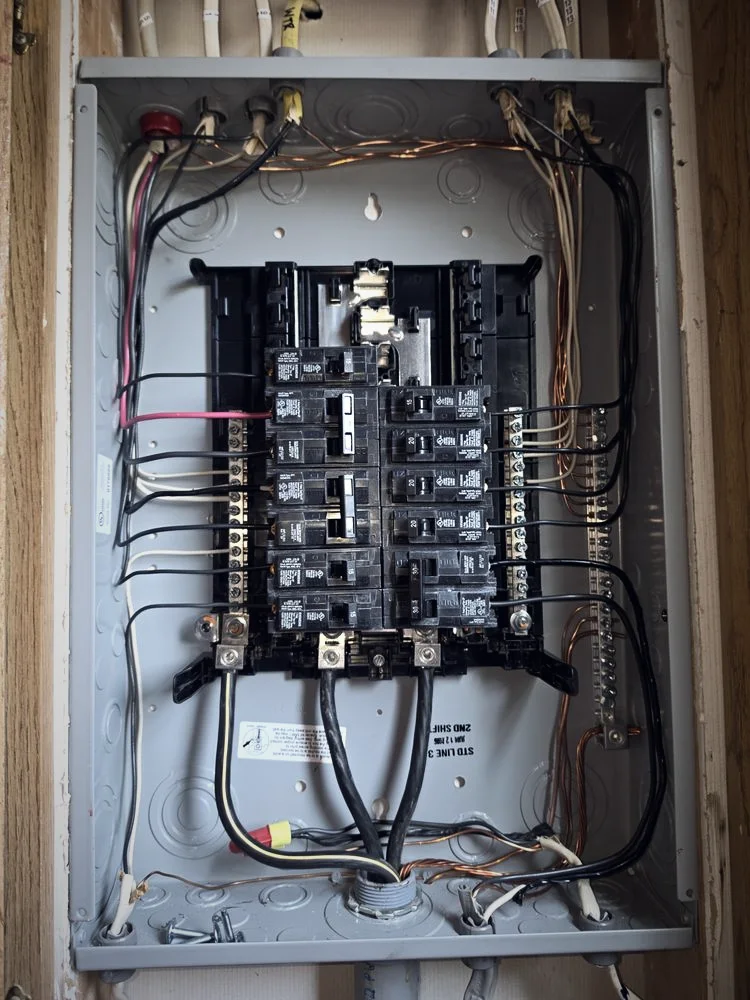
A labeled panel, accessible junctions, the old parts if you want to see them, and a straight account of anything found along the way that was not part of the call.
Where something else was found, you get told what it is and whether it needs doing now, later or not at all. That third answer is a real answer and it gets used.
Permits, inspections and why they vary here
Requirements genuinely differ across this metro. O’Fallon, St. Charles, St. Peters, the St. Louis County municipalities and St. Louis City each run their own process, and what one treats as a minor repair another permits and inspects.
Work that needs a permit gets one, and work that needs an inspection is left ready for it with the panel labeled and the junctions accessible. That matters most before a closing, when an inspector’s written item becomes someone’s negotiating position.
“Clint did an excellent job installing two bathroom exhaust fans. He installed high-quality fans that were far superior to the ones I had purchased from a big box store. I highly recommend his services.”
David Hinners · Google review
How the visit goes
- The call
What you are seeing, smelling or hearing, and when it started. Heat and smell move you up the day.
- The measurement
Reproduce the symptom, then divide the circuit until the fault is on one side of the split. Measurement at the panel and at the point of failure.
- The finding
What it was, with the reading. Including when the answer is one loose connection rather than the rewire you were braced for.
- The work
Correction scoped to the finding, permitted and re-inspected where the municipality requires it, and documentation you can hand to an inspector or a buyer.
What the job includes
- Reproducing the symptom before anything is replaced
- Measurement at the panel and at the fault
- A plain-words finding with the number that supports it
- Correction scoped to the finding, nothing bundled
- Permit and re-inspection where a municipality requires it
- Documentation you can hand to an inspector or a buyer
What it does not
- Replacing parts that test sound
- Opinions where a measurement is possible
- Work outside electrical, though we will say who to call
Work that is not electrical gets a referral, not a quote. See the work itself, or send the details.
Related safety & code work
Electrical Overload Diagnosis across the metro
Five jurisdictions, five different sets of conditions. What an inspector looks at first differs by address here, which shapes the job as much as the house does.
St. Charles County
The subdivisions here were wired correctly for what houses drew at the time. A charger, a heat pump and a finished lower level later, the arithmetic no longer works out.
St. Louis County
This is where the genuinely old wiring lives: cloth insulation, no equipment ground, fuse panels and the mid-seventies aluminum. Each has an accepted remedy rather than requiring a whole-house rewire.
St. Louis City
Brick with plaster over lath, party walls that limit where a run can go, and a hundred years of electrical layers in the basement.
County by county coverage is on the service areas page.
Questions worth asking first.
My lights flicker across the whole house. Is that urgent?
Potentially. A whole-house flicker, especially when a large motor starts, can mean a failing service neutral, which can damage equipment. That gets measured at the panel before anything inside is touched.
Half my house has no power. Is that a breaker?
Usually not. Losing roughly half the house is the signature of a lost leg of the service or a failing neutral, and it gets measured at the service entrance first.
There is a burning smell near my panel. What should I do?
Treat that as urgent. Turn off what you safely can and call. Heat and smell at a panel or outlet are the two symptoms that should never wait for a scheduled visit.
How long have you been doing this?
Clint has seventeen years in the trade and has been running his own shop out of O’Fallon since 2022.
What do your reviews say?
5.0 from 94 Google reviews, and A+ accreditation with the BBB held since 2022. The reviews are on the reviews page with links to where each was posted.
Get the measurement first.
The reading comes before the number, so you know what you are deciding about. Electrical Overload Diagnosis in O’Fallon and across the metro.
Reachable Mon-Thu 8-5, Fri 8-4, Sat 10-3. Outside those hours, leave the details.