



Home / Remodels / Outdoor Kitchen Electrical Wiring
Outdoor Kitchen Electrical Wiring
Inspection timing drives the rest of the trades on a remodel. New construction wiring is judged by the inspection, so it gets planned to pass the first time.
Outdoor Kitchen Electrical Wiring in O’Fallon and across St. Charles, St. Louis, Lincoln and Warren counties.
Clint Ehman does the work himself. Seventeen years in the trade, Infinity Electric since June 2022.
5.0 from 94 Google reviews · BBB A+ since 2022
What this work actually involves
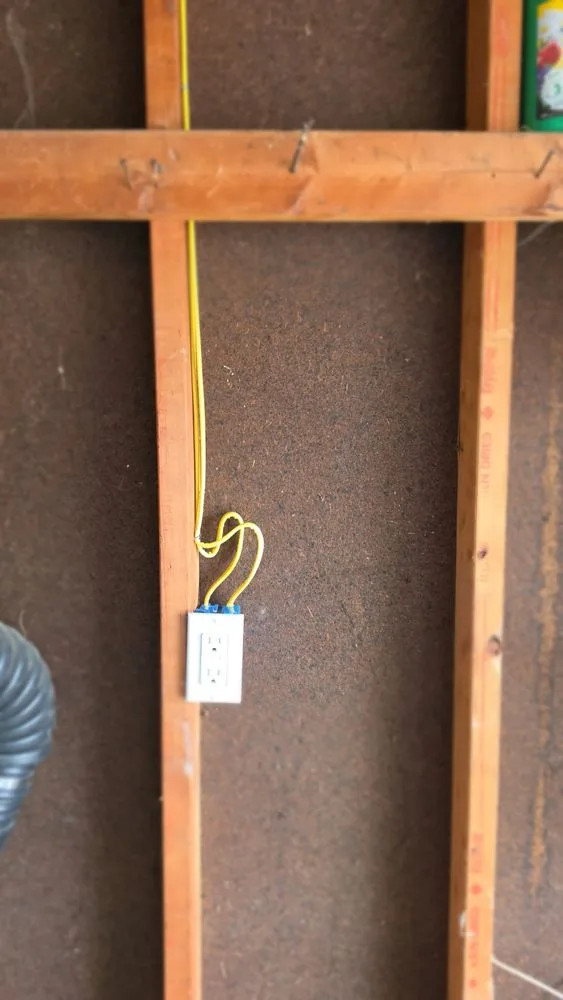
Rough-in is labeled and photographed before insulation, which saves opening a wall later.
Nothing gets quoted off a description. The reading comes first, because a symptom has several possible causes at very different prices and only a measurement separates them.
Where a permit and an inspection are required they happen, and the site is left ready for them. One person carries the job from the first call to the final test.
When people call about this
- A garage becoming a workshop
- An ADU on the plans
- A bathroom with one outlet
- A basement about to be finished
Why people choose Clint for it
A one-person shop cannot be in two places at once, so you get a real date instead of a window. What you also get is the same person every time.
Seventeen years in the trade, four of them on his own, 5.0 from 94 Google reviews and an A+ BBB accreditation since 2022.
Where this is done
Out of O’Fallon across five jurisdictions: St. Charles County, St. Louis County, St. Louis City, and Lincoln and Warren counties. About fifty miles in any direction.
See the full service area, or the rest of our remodel & new construction work.
Everything is cheaper before the drywall
Rough-in is the one moment when circuits are nearly free to place. Afterwards the same change means opening a finished wall.
That is why the plan gets made against the finished room: where the television will sit, where the treadmill goes, whether the freezer ends up in the basement.
Rough-in records save walls
Photographs of the rough-in, taken before insulation, are worth more than anyone expects. Two years later they show exactly where a cable runs behind finished drywall.
Labeling at both ends does the same job for the next electrician.
What a kitchen remodel needs electrically
Kitchens carry more dedicated circuits than any other room: counter receptacles, dishwasher, disposal, microwave, refrigerator, range. Most older kitchens have a fraction of that.
The circuit plan gets drawn against the appliances actually being installed, rough-in is inspected before drywall, and the counter receptacle spacing is set to the code rather than to the old layout.
What makes this harder in older housing stock
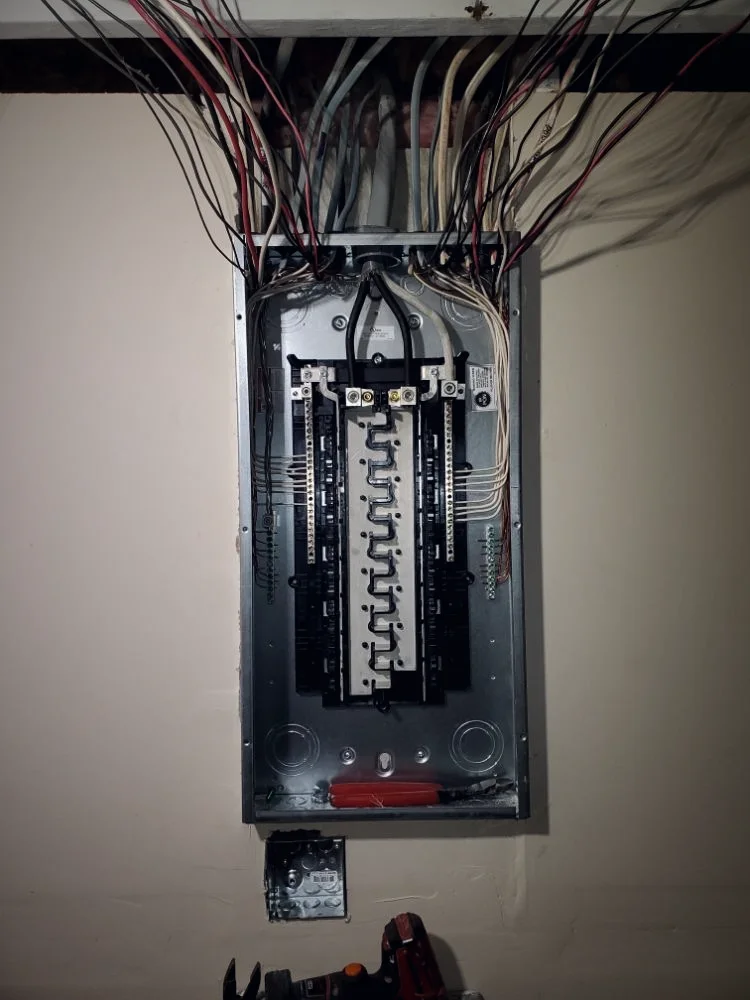
Across this metro the recurring complications are predictable: no equipment ground, aluminum branch wiring from the mid-seventies, knob-and-tube buried in blown-in insulation, panels that have been added to several times, and splices in places the code has not allowed for decades.
Those turn a simple job into a decision about scope. The decision gets put to you with the reading behind it rather than made quietly and billed.
Permits, inspections and why they vary here
Requirements genuinely differ across this metro. O’Fallon, St. Charles, St. Peters, the St. Louis County municipalities and St. Louis City each run their own process, and what one treats as a minor repair another permits and inspects.
Work that needs a permit gets one, and work that needs an inspection is left ready for it with the panel labeled and the junctions accessible. That matters most before a closing, when an inspector’s written item becomes someone’s negotiating position.
“Infinity came out for same day service after an electric line had been cut in my yard. He was able to locate and correct it very quickly, eliminating any risk of injury or additional power outage.”
Melissa Johnson · Google review
How the visit goes
- The call
The plans, the rooms, and what will actually be in them when it is finished.
- The measurement
Load calculation before framing, panel capacity, and a circuit plan drawn against the finished use rather than the label on the drawing.
- The finding
Whether the existing service covers the project, and what the rough-in needs to include so nothing is opened up twice.
- The work
Rough-in labeled and photographed before insulation, inspection timed around the other trades, devices and fixtures at finish, final inspection attended.
What the job includes
- Circuit plan drawn against the finished room, not the label on the plan
- Load calculation before framing, so capacity is known early
- Rough-in labeled and photographed before insulation
- Coordination with the other trades on inspection timing
- Device and fixture install at finish
- Final inspection attended
Related remodel & new construction work
Outdoor Kitchen Electrical Wiring across the metro
Five jurisdictions, five different sets of conditions. What an inspector looks at first differs by address here, which shapes the job as much as the house does.
St. Louis County
St. Louis County has the older housing stock, which is where knob-and-tube, cloth wire and fuse-box conversions come from. Inspection requirements vary by municipality, and that variation is half the job.
St. Louis City
Century housing, its own permitting authority, and occupancy inspections that decide a lot of the calls.
Lincoln County
Rural properties where the panel is fine and the two hundred foot run to the barn is the actual job.
Every municipality covered is listed on the service areas page.
Questions worth asking first.
Do you coordinate with my other trades?
Yes. Rough-in has to land between demolition and drywall, and inspections get timed so the drywall and tile crews are not waiting.
How many circuits does a kitchen need?
More than most older kitchens have: counter receptacles, dishwasher, disposal, microwave, refrigerator and range each have requirements. The plan is drawn against the appliances actually being installed.
When should the electrician come in on a remodel?
Before the drywall. Rough-in is when circuits are cheap to place, and that is the one chance to put them where the finished room will actually be used.
Where do you work?
Out of O’Fallon across St. Charles County, St. Louis County, St. Louis City, and Lincoln and Warren counties, roughly a fifty mile radius.
Do you pull permits?
Where the municipality requires one, yes, and the work is left ready for inspection with the panel labeled and junctions accessible. Requirements genuinely differ across this metro, which is why it is established per address rather than assumed.
Ask what it actually reads.
You get the figure and what it means, before any work is agreed. Outdoor Kitchen Electrical Wiring in O’Fallon and across the metro.
Mon-Thu 8-5 · Fri 8-4 · Sat 10-3. If a message suits you better, there is a form.