



Home / Panels / 200 Amp Service Upgrade
200 Amp Service Upgrade
Service equipment ages differently from the wire it feeds, which is why the two get judged separately. A service either carries what the house asks of it or it does not, and a load calculation answers that in numbers rather than opinions.
200 Amp Service Upgrade in O’Fallon and across St. Charles, St. Louis, Lincoln and Warren counties.
No dispatcher and no commissioned salesman. Seventeen years in the trade, four of them on his own.
5.0 from 94 Google reviews · BBB A+ since 2022
What this work actually involves
Every circuit is identified and labeled on the directory before the cover goes back on, because the next person in that panel needs to read it.
Clint measures before he quotes. The reading comes first, then what it means, then the one repair that solves it. If the honest answer is smaller than what you called about, that is the answer you get, even when the bigger job pays better.
Work that needs a permit gets one, and work that needs an inspection is left ready for it. One person does the diagnosis and the repair, so nothing is lost between a salesman and a technician.
When people call about this
- No room left for a new circuit
- Fuses instead of breakers
- Lights that dim when a large appliance starts
- Breakers that trip under normal load
Why people choose Clint for it
A one-person shop cannot be in two places at once, so you get a real date instead of a window. What you also get is the same person every time.
Seventeen years in the trade, four of them on his own, 5.0 from 94 Google reviews and an A+ BBB accreditation since 2022.
Where this is done
A roughly fifty mile working radius from O’Fallon, covering thirty municipalities across five jurisdictions in the St. Louis metro.
See the full service area, or the rest of our panels & service work.
Sub-panel, service upgrade, or neither
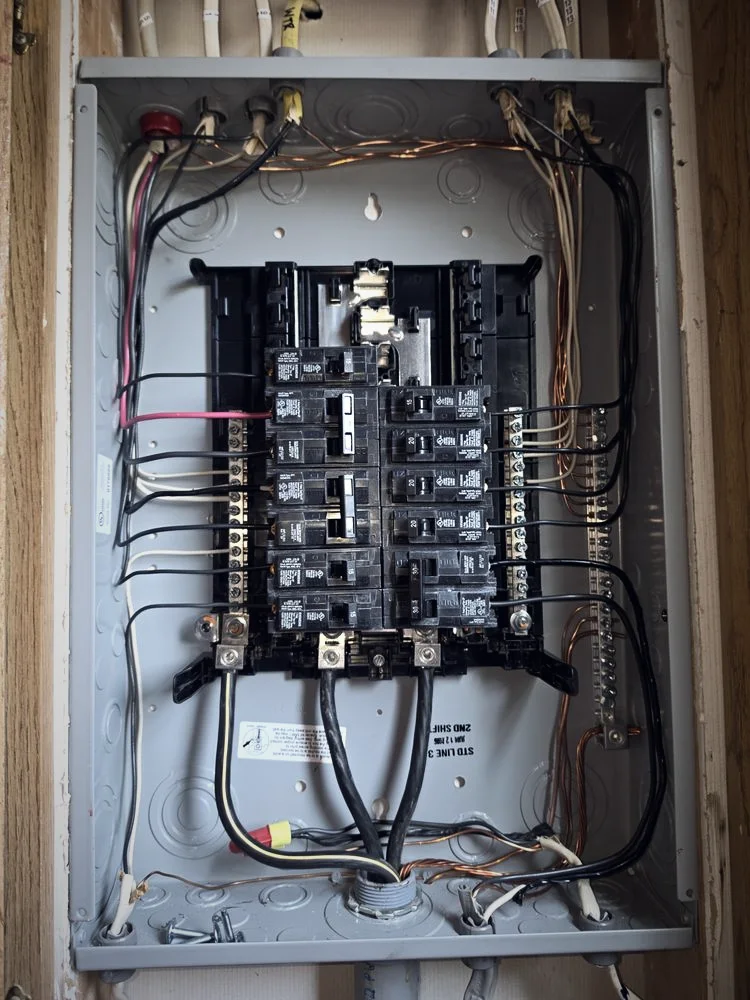
These three get confused constantly and they differ by thousands of dollars. A sub-panel adds places to land circuits and is right when the service carries the load but the box is full. A service upgrade raises what the house can draw and is right when the calculation says the service is genuinely at its limit.
Neither is right when the real problem is one overloaded circuit, which is more common than either. The load calculation is what separates the three, and it happens before anything is quoted.
Sub-panel or service upgrade
A sub-panel adds spaces. It does not add capacity. If the calculation says the service is fine and the panel is simply full, a sub-panel is the cheaper and entirely proper answer.
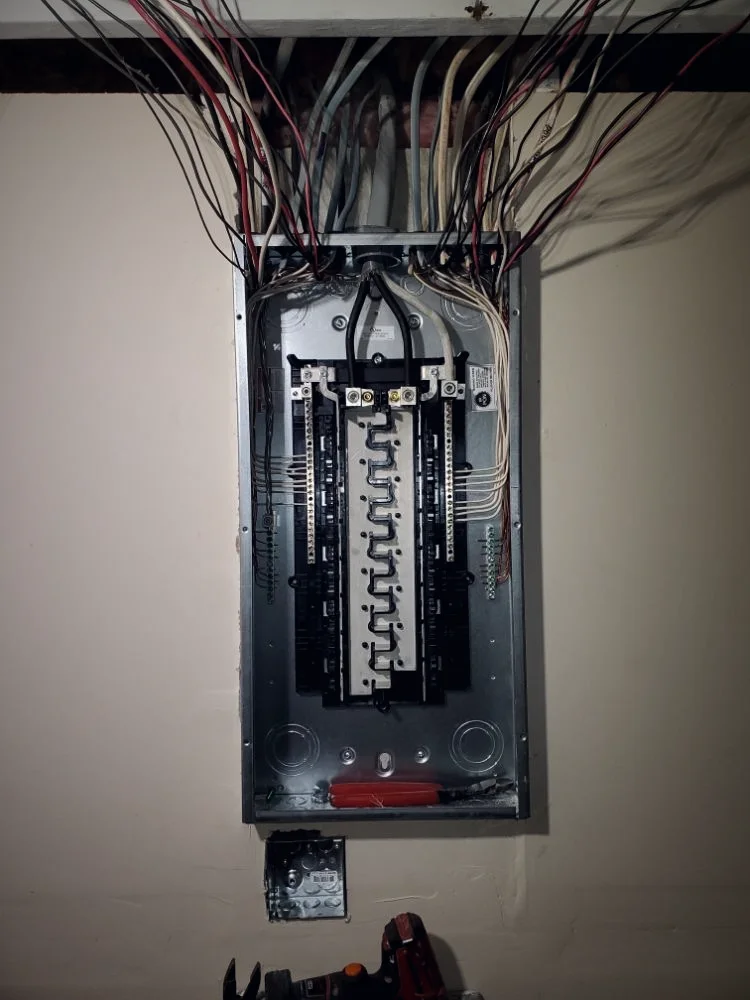
If the calculation says the service is undersized, a sub-panel just moves the problem. That is a service upgrade: new panel, new conductors, usually a new meter base, and coordination with the utility.
Whether the service actually needs upgrading
A full panel and an overloaded service are different problems with different prices. The load calculation tells you which one you have, and a surprising number of calls turn out to be the cheaper one.
If the service genuinely needs upgrading, that means utility coordination, a permit, new equipment and an inspection, and you are told the sequence and the outage up front.
Labeling, torque and the parts nobody sees
The parts of a panel job that decide whether it lasts are invisible once the cover goes back on: conductors torqued to specification, neutrals and grounds separated correctly downstream of the main, and a directory that names real circuits.
None of that shows in a photograph and all of it shows in ten years. It is also what an inspector reads first.
Why the diagnosis comes before the quote
A symptom has several possible causes with very different prices, and the only thing that separates them is a measurement. Quoting the expensive one covers the risk; quoting the cheap one and finding the expensive one mid-job is worse.
So the reading happens first, you are told what it says, and then the work is scoped to it. Where the honest answer is the small repair, that is the answer you get, even when the larger job pays better.
“Infinity came out for same day service after an electric line had been cut in my yard. He was able to locate and correct it very quickly, eliminating any risk of injury or additional power outage.”
Melissa Johnson · Google review
How the visit goes
- The call
You describe what the house is doing and what prompted it: a tripping breaker, an inspector’s note, a planned addition. That shapes what gets measured first.
- The measurement
Load across the service under real conditions, voltage at the main, the condition of every lug and the bus. On an older panel, the breaker brand gets identified, because some have no listed replacement still made.
- The finding
You get the number and what it means. If the service carries what the house asks of it, you hear that, and the conversation becomes a sub-panel or a single circuit instead of a service upgrade.
- The work
Permit where required, utility coordinated for the disconnect, new equipment installed, every circuit identified and labeled, and the site left ready for the inspector.
What the job includes
- A load calculation against what the house actually runs, given to you as a number
- Permit application where the municipality requires one
- New panel, breakers and a legible circuit directory
- Utility coordination for the disconnect and reconnect
- Grounding and bonding brought to current requirements
- The site left ready for inspection, and the inspection attended
What it does not
- Drywall repair beyond the panel opening
- Appliance repair, which is a different trade
- Work on the utility side of the meter, which is the utility’s own
If the fix belongs to another trade, you get the name of one rather than a price from this one. See finished work, or say what the house is doing.
Related panels & service work
200 Amp Service Upgrade across the metro
Where the house is changes what the work involves. What an inspector looks at first differs by address here, which shapes the job as much as the house does.
St. Louis County
Dozens of municipalities, each with its own occupancy inspection and its own thresholds. Knowing which authority has the address matters as much as knowing the house.
St. Louis City
St. Louis City is century brick with shared walls and basement panels that have been added to five times. Code corrections and occupancy inspections are the common call.
Lincoln County
Rural properties where the panel is fine and the two hundred foot run to the barn is the actual job.
Every municipality covered is listed on the service areas page.
Questions worth asking first.
Do I need a bigger service, or just more space in the panel?
Those are different problems. A full panel with spare capacity takes a sub-panel or tandem breakers. A panel that is out of capacity takes a service upgrade, and the load calculation tells us which one you have before anything is ordered.
Will the power be off all day?
A panel change means the service is off while the work happens, usually most of a working day. You will be told the window before the day starts, and the utility and inspection timing are arranged around it.
How do I know if my panel brand is a problem?
Federal Pacific Stab-Lok and Zinsco both have documented failure-to-trip histories and no current listed replacement breaker, so the panel gets replaced rather than repaired. The label on the door identifies it in seconds.
Where do you work?
Out of O’Fallon across St. Charles County, St. Louis County, St. Louis City, and Lincoln and Warren counties, roughly a fifty mile radius.
Do you pull permits?
Where the municipality requires one, yes, and the work is left ready for inspection with the panel labeled and junctions accessible. Requirements genuinely differ across this metro, which is why it is established per address rather than assumed.
Ask what it actually reads.
You get the figure and what it means, before any work is agreed. 200 Amp Service Upgrade in O’Fallon and across the metro.
Mon-Thu 8-5 · Fri 8-4 · Sat 10-3. A written note works too.