



Home / Outlets / GFCI Outlet Replacement
GFCI Outlet Replacement
Protection type is decided by location, which is what the code is really specifying. GFCI and AFCI requirements changed for good reasons, and they are the cheapest safety work available in a house.
GFCI Outlet Replacement in O’Fallon and across St. Charles, St. Louis, Lincoln and Warren counties.
Owner-operated: the person who answers the phone is the person who measures it.
5.0 from 94 Google reviews · BBB A+ since 2022
What this work actually involves
The circuit gets traced before anything is added, so a new outlet does not quietly put an old circuit over its limit.
Clint measures before he quotes. The reading comes first, then what it means, then the one repair that solves it. If the honest answer is smaller than what you called about, that is the answer you get, even when the bigger job pays better.
Work that needs a permit gets one, and work that needs an inspection is left ready for it. One person does the diagnosis and the repair, so nothing is lost between a salesman and a technician.
When people call about this
- A tripping kitchen circuit
- Extension cords as permanent wiring
- Outlets with no ground
- A new appliance with no circuit
Why people choose Clint for it
One person does the diagnosis and the repair, so nothing is lost between a salesman and a technician, and nobody is paid to sell past the finding.
Seventeen years in the trade, four of them running his own shop, 5.0 from 94 Google reviews, and an A+ BBB accreditation held since 2022.
Where this is done
Out of O’Fallon across five jurisdictions: St. Charles County, St. Louis County, St. Louis City, and Lincoln and Warren counties. About fifty miles in any direction.
See the full service area, or the rest of our outlets & circuits work.
Dedicated circuits and why they exist
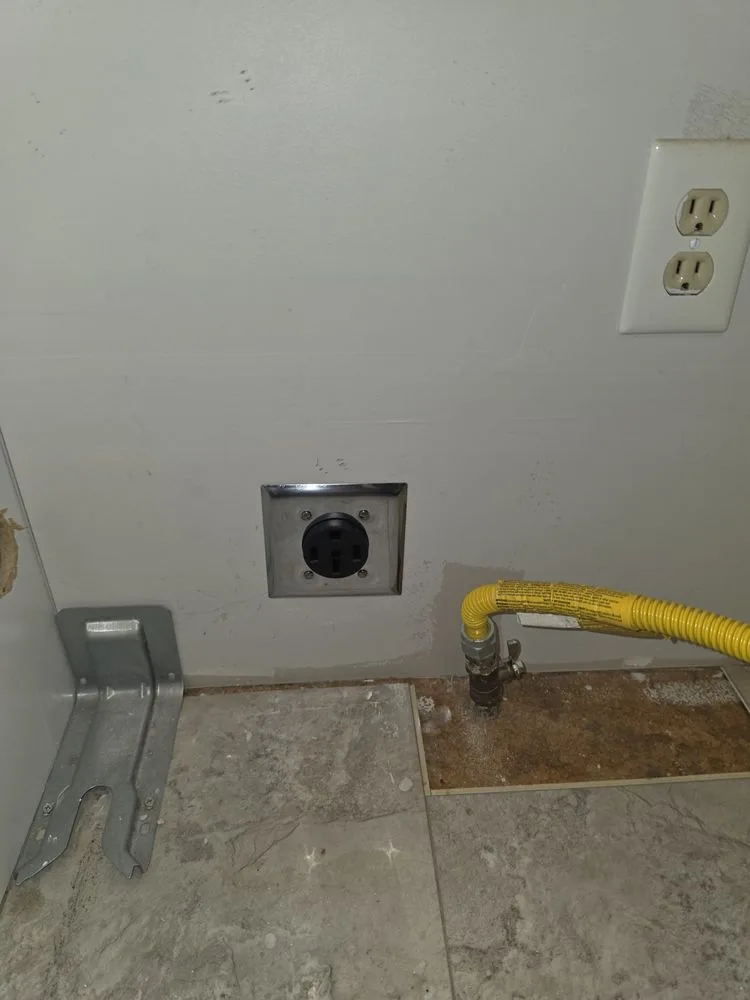
Some appliances do not share. A microwave, a disposal, a dishwasher and a refrigerator each expect their own circuit, and a kitchen wired to an older standard usually has fewer circuits than the appliances now in it.
That is why a kitchen breaker trips when the microwave and the kettle run together. It is not a fault; it is arithmetic, and a dedicated circuit ends it.
Backstabbed connections and the decade-later fault
A device can be wired by pushing conductors into spring holes in the back, or by landing them under the screw terminals. The first is faster and the second lasts. Spring contacts relax over years, and a relaxed contact arcs.
A great many intermittent outlets in houses of a certain age are exactly this, and the fix is to re-terminate properly rather than replace a device that was never faulty.
Where GFCI protection is required and why
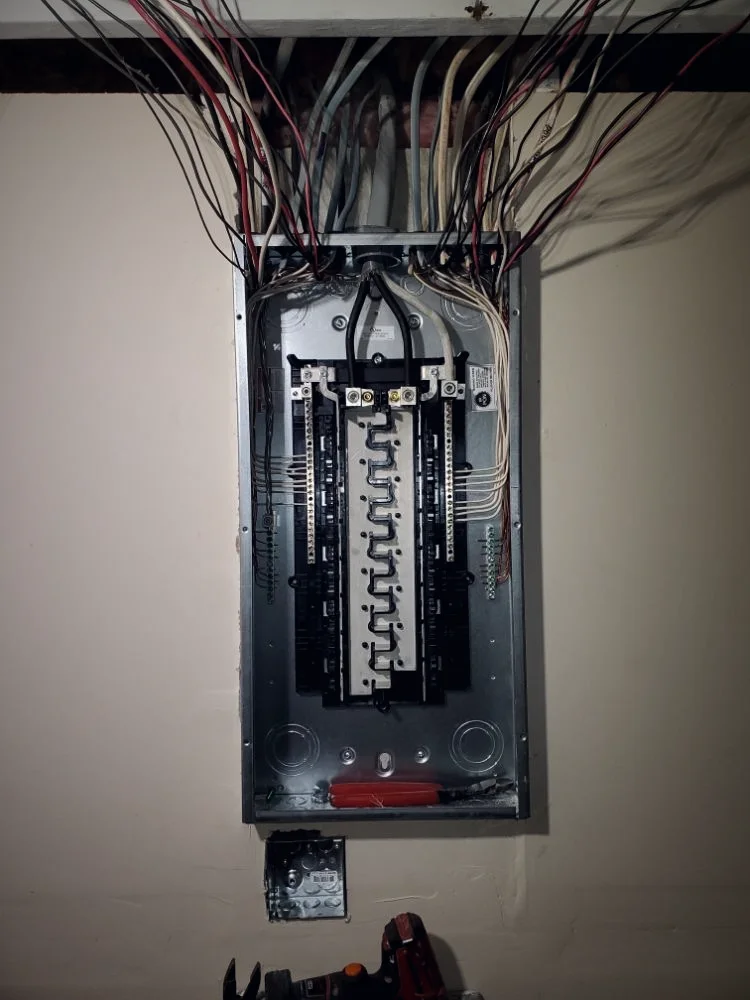
GFCI protection watches for current leaving the circuit by a path other than the neutral, which is what happens through a person. It is required in the locations where water and ground are present: kitchens, baths, laundry, garages, basements, outdoors.
It can be a device at the outlet or a breaker at the panel, and which one is right depends on how the circuit is wired and how many outlets are downstream. A GFCI that trips repeatedly is reporting something real, and finding what is a diagnosis rather than a replacement.
Outlets, box fill and backstabbing
Two failures account for most outlet calls. Backstabbed conductors, pushed into the spring holes rather than under the screws, loosen and arc. And boxes stuffed past their fill rating overheat.
Devices go in with conductors under the screw terminals, box fill is checked against the conductor count, and protection is matched to the location rather than copied from the neighbour.
Who actually does the work
Clint Ehman does the diagnosis and the repair himself. There is no salesman writing a scope for a technician to execute, and nobody paid on what the visit totals.
Seventeen years in the trade, four of them running his own shop out of O’Fallon, licensed, bonded and insured with workers compensation coverage, 5.0 from 94 Google reviews, and A+ BBB accreditation held since 2022.
“Clint came out installed me a large 200 amp panel put some new dedicated lines in my basement and garage he did great clean work all inspections passed he was thorough and knowledgeable. I will have him back out again.”
Jason Holtzman · Google review
How the visit goes
- The call
What tripped, or what you want to plug in that there is nowhere to plug in.
- The measurement
Tracing the circuit to find everything already on it, then checking box fill, gauge and existing protection.
- The finding
Whether this is a new dedicated circuit or a device swap, and whether protection needs upgrading for the location.
- The work
Circuit run and terminated properly, devices installed tight rather than backstabbed, protection matched to location, and every outlet on the circuit tested.
What the job includes
- Tracing the existing circuit before anything is added
- Correct protection for the location, GFCI or AFCI as the code calls for
- Dedicated circuits where an appliance needs one
- Box fill and wire gauge checked and corrected
- Devices installed level and tight, not backstabbed
- Testing at every outlet on the circuit
What it does not
- Appliance installation beyond the connection
- Cabinet or countertop modification
- Low-voltage data unless it is part of the same job
If the fix belongs to another trade, you get the name of one rather than a price from this one. There is a gallery of finished jobs, and a form if that is easier than calling.
Related outlets & circuits work
GFCI Outlet Replacement across the metro
Five jurisdictions, five different sets of conditions. What an inspector looks at first differs by address here, which shapes the job as much as the house does.
St. Charles County
St. Charles County is mostly 1990s and 2000s subdivisions. The wiring is modern and the services were sized before anyone owned an electric car or finished a basement, so capacity is the usual constraint rather than condition.
St. Louis County
Houses with real history in the walls, and a permit process that changes from one municipality to the next.
St. Louis City
Century housing, its own permitting authority, and occupancy inspections that decide a lot of the calls.
Every municipality covered is listed on the service areas page.
Questions worth asking first.
Why is my outlet warm?
Heat at a device means a loose or backstabbed termination arcing, and it does not resolve itself. That one gets looked at promptly rather than scheduled out.
Can you add an outlet without opening the wall?
Usually, depending on framing, insulation and fire blocking in the cavity. You get a straight answer about which before the work starts.
Why does my kitchen breaker keep tripping?
Usually too much on one circuit rather than a fault. Tracing the circuit shows what is sharing it, and a dedicated circuit for the heavy appliance normally ends it.
Are you licensed and insured?
Licensed, bonded and insured, with workers compensation coverage, and accredited A+ with the BBB since 2022.
Where do you work?
Out of O’Fallon across St. Charles County, St. Louis County, St. Louis City, and Lincoln and Warren counties, roughly a fifty mile radius.
Ask what it actually reads.
You get the figure and what it means, before any work is agreed. GFCI Outlet Replacement in O’Fallon and across the metro.
Weekdays 8-5, Fri to 4, Sat 10-3 · or describe it in writing.