

Home / Generators / Portable Generator Inlet Installation
Portable Generator Inlet Installation
Fuel type changes where the unit can sit and what it costs to run. Surge protection is the cheapest insurance in the house, and whole-home protection works differently from a power strip.
Portable Generator Inlet Installation in O’Fallon and across St. Charles, St. Louis, Lincoln and Warren counties.
Clint Ehman, seventeen years in the trade, running Infinity Electric out of O’Fallon since 2022.
5.0 from 94 Google reviews · BBB A+ since 2022
What this work actually involves
Loads are picked deliberately: what has to run, what can wait, and what the generator can actually carry.
A number follows a measurement here, never a guess. You get told what the reading was and what it means before any work is agreed, including on the days when the answer is one loose connection.
Permitted and inspected where the address requires it, labeled at the panel, and done by the person who diagnosed it rather than handed down a chain.
When people call about this
- A well pump the house depends on
- A sump pump and a finished basement
- Portable generator cords through a window
- A home office that cannot go dark
Why people choose Clint for it
What the reviews keep mentioning is being told what the problem actually was. That is what an owner-operated shop can do and a dispatch model structurally cannot.
Seventeen years in the trade, 5.0 from 94 Google reviews, and BBB accredited A+ since December 2022.
Where this is done
O’Fallon and the surrounding St. Charles County suburbs, out through St. Louis County and St. Louis City, and into Lincoln and Warren counties. Roughly a fifty mile radius.
See the full service area, or the rest of our backup power work.
Transfer switches and back-feeding
A transfer switch physically prevents the generator and the utility from ever being connected at once. That is not a formality: back-feeding energises the lines outside and endangers the crews restoring your street.
An interlock kit achieves the same thing more cheaply on many panels, by making it mechanically impossible to close the generator breaker and the main together.
Writing the list before pricing the system
Backup cost is decided almost entirely by the list of what has to keep running. Furnace blower, refrigerator, well or sump pump, a few circuits of light: written down honestly, that list is far smaller and cheaper than running everything.
The list comes first, the size comes from the list, and the quote comes from the size. Done the other way round you buy a system sized to a brochure.
Sizing it to what you actually need running
The cost difference between keeping the essentials alive and running the whole house is large, and it is decided by a list you write: furnace blower, refrigerator, well pump, sump, a few circuits of light. Added up honestly, that list is usually smaller than people expect.
Whatever the size, the transfer has to make back-feeding physically impossible, which is a transfer switch or a listed interlock, never a cord into a dryer outlet. That is the part inspectors look at and the part that protects the utility crews working the line.
What makes this harder in older housing stock
Across this metro the recurring complications are predictable: no equipment ground, aluminum branch wiring from the mid-seventies, knob-and-tube buried in blown-in insulation, panels that have been added to several times, and splices in places the code has not allowed for decades.
Those turn a simple job into a decision about scope. The decision gets put to you with the reading behind it rather than made quietly and billed.
Who actually does the work
Clint Ehman does the diagnosis and the repair himself. There is no salesman writing a scope for a technician to execute, and nobody paid on what the visit totals.
Seventeen years in the trade, four of them running his own shop out of O’Fallon, licensed, bonded and insured with workers compensation coverage, 5.0 from 94 Google reviews, and A+ BBB accreditation held since 2022.
“Infinity came out for same day service after an electric line had been cut in my yard. He was able to locate and correct it very quickly, eliminating any risk of injury or additional power outage.”
Melissa Johnson · Google review
How the visit goes
- The call
What you need to keep running and how often the power goes out where you are.
- The measurement
The loads you named, added up honestly, and the panel’s capacity to feed a transfer switch or interlock.
- The finding
A size and a configuration, with the cost difference between keeping the essentials on and running the whole house made plain.
- The work
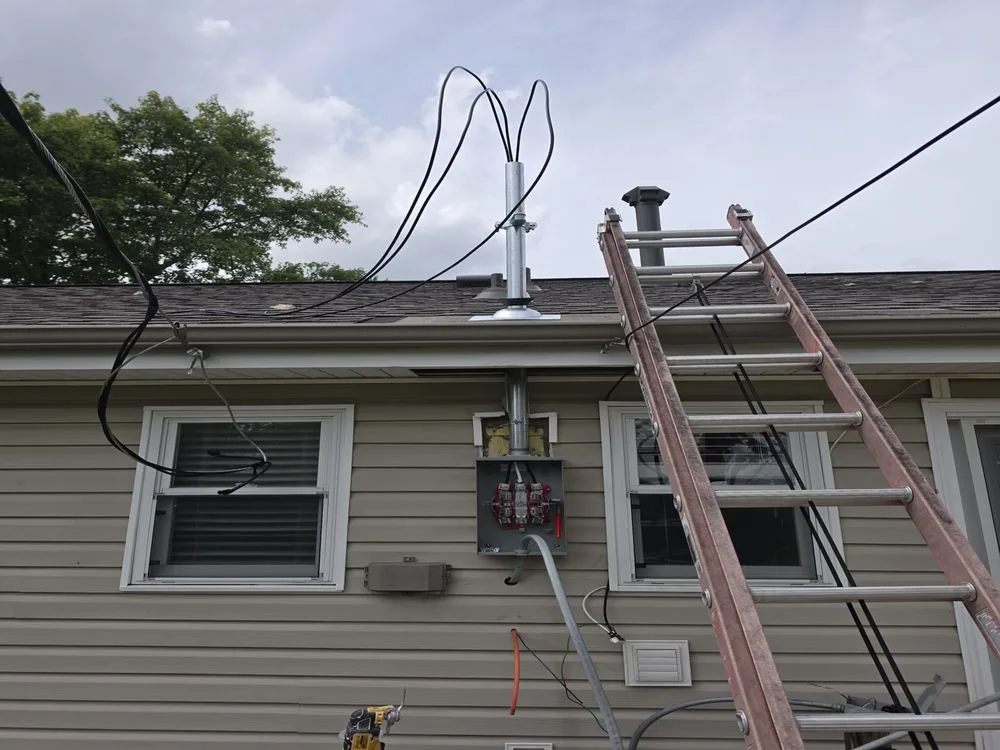
Unit sited, circuit run, transfer switch or interlock installed so back-feeding is impossible, inspected, then a walkthrough of starting and transferring with you present.
What the job includes
- Load selection: what has to run, what can wait
- Generator or inlet sized to the chosen loads
- Transfer switch or interlock so back-feeding is impossible
- Pad or mounting, and the circuit to it
- Permit and inspection where required
- A walkthrough of starting and transferring, in person
What it does not
- Gas piping, which is the plumber’s trade
- Concrete pads beyond a prefabricated base
- Generator servicing contracts
Plumbing, HVAC and structural work get a pointer to someone who does them properly. Finished work is in the gallery. To book, pick a day.
Related backup power work
Portable Generator Inlet Installation across the metro
The same job is not the same job in every part of this metro. Same trade across five jurisdictions out of O’Fallon, with a different inspection process in each.
St. Charles County
St. Charles County is mostly 1990s and 2000s subdivisions. The wiring is modern and the services were sized before anyone owned an electric car or finished a basement, so capacity is the usual constraint rather than condition.
St. Louis County
Older stock that has been worked on repeatedly, so a panel here has often been added to three or four times by different hands.
St. Louis City
Brick with plaster over lath, party walls that limit where a run can go, and a hundred years of electrical layers in the basement.
The whole working radius is mapped on the service areas page.
Questions worth asking first.
Is a transfer switch required?
Yes, for any permanent standby system. It stops the generator back-feeding the utility, which is what protects the line workers restoring your street.
Can I use a generator cord into a dryer outlet?
No. That back-feeds the utility and endangers the crews working your line. A transfer switch or a listed interlock is what makes that physically impossible.
Battery or generator?
A battery is silent and instant for a limited number of hours; a generator runs as long as it has fuel. How long your power usually stays out decides it.
Where do you work?
Out of O’Fallon across St. Charles County, St. Louis County, St. Louis City, and Lincoln and Warren counties, roughly a fifty mile radius.
Do you pull permits?
Where the municipality requires one, yes, and the work is left ready for inspection with the panel labeled and junctions accessible. Requirements genuinely differ across this metro, which is why it is established per address rather than assumed.
Ask what it actually reads.
You get the figure and what it means, before any work is agreed. Portable Generator Inlet Installation in O’Fallon and across the metro.
Mon-Thu 8-5 · Fri 8-4 · Sat 10-3. If a message suits you better, there is a form.