



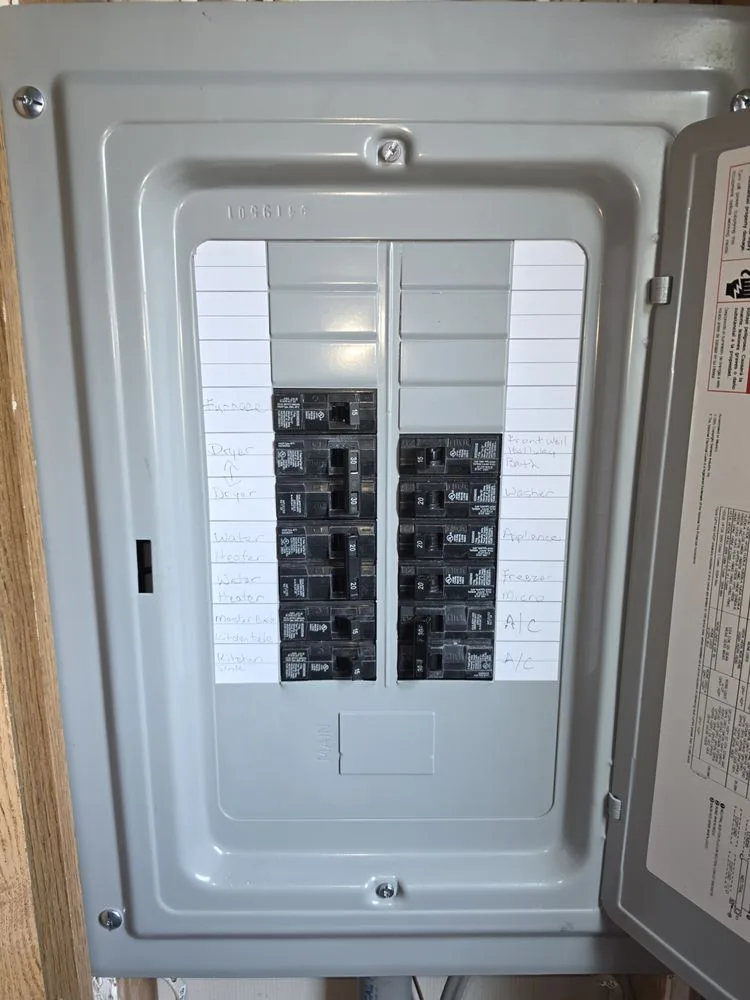
Home / Panels / Electrical Panel Upgrade
Electrical Panel Upgrade
A sub-panel solves a space problem; a service upgrade solves a capacity problem. They are not interchangeable. A service either carries what the house asks of it or it does not, and a load calculation answers that in numbers rather than opinions.
Electrical Panel Upgrade in O’Fallon and across St. Charles, St. Louis, Lincoln and Warren counties.
Owner-operated by Clint Ehman. Seventeen years in the trade, four of them running his own shop.
5.0 from 94 Google reviews · BBB A+ since 2022
What this work actually involves
The load gets calculated against what the house actually runs, not against a rule of thumb. If the existing service carries it, you hear that.
A number follows a measurement here, never a guess. You get told what the reading was and what it means before any work is agreed, including on the days when the answer is one loose connection.
Permitted and inspected where the address requires it, labeled at the panel, and done by the person who diagnosed it rather than handed down a chain.
When people call about this
- A panel brand an inspector flags on sight
- Scorch marks, heat or a smell at the cover
- No room left for a new circuit
- Fuses instead of breakers
Why people choose Clint for it
Nobody here earns more by finding more. That is the structural reason the small answer gets given when the small answer is true.
Seventeen years in the trade, Infinity Electric founded in June 2022, 5.0 from 94 Google reviews, BBB accredited A+.
Where this is done
O’Fallon first, then the rest of St. Charles County, St. Louis County and the City, and out to Lincoln and Warren. If you are just past that, the call is still worth making.
See the full service area, or the rest of our panels & service work.
Sub-panel or service upgrade
A sub-panel adds spaces. It does not add capacity. If the calculation says the service is fine and the panel is simply full, a sub-panel is the cheaper and entirely proper answer.
If the calculation says the service is undersized, a sub-panel just moves the problem. That is a service upgrade: new panel, new conductors, usually a new meter base, and coordination with the utility.
Sub-panel, service upgrade, or neither
These three get confused constantly and they differ by thousands of dollars. A sub-panel adds places to land circuits and is right when the service carries the load but the box is full. A service upgrade raises what the house can draw and is right when the calculation says the service is genuinely at its limit.
Neither is right when the real problem is one overloaded circuit, which is more common than either. The load calculation is what separates the three, and it happens before anything is quoted.
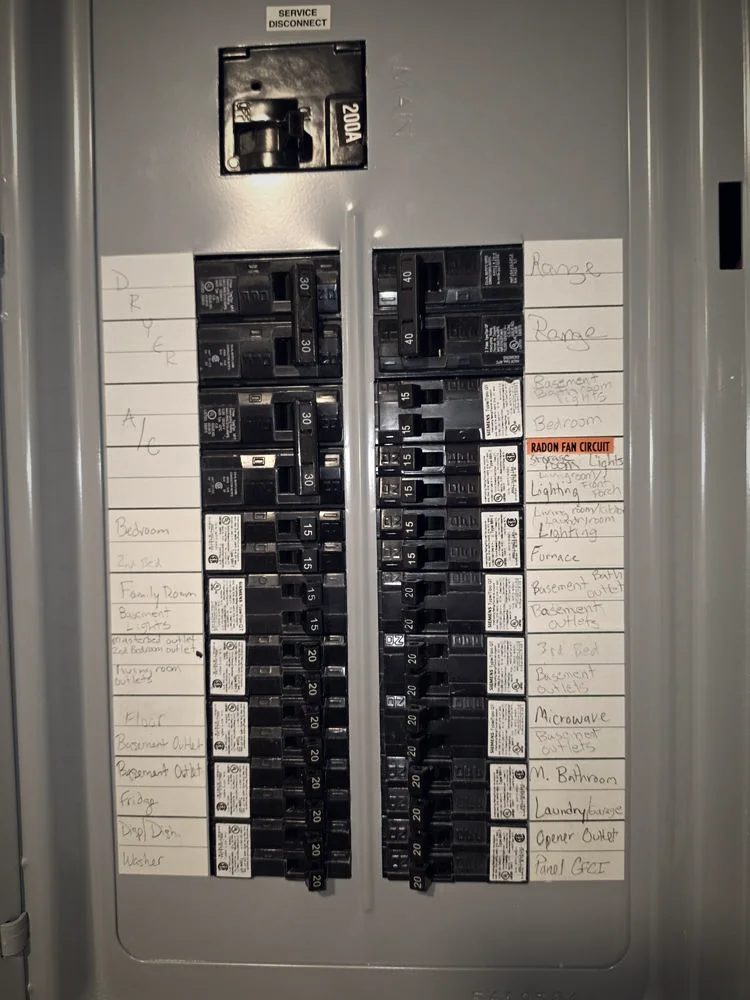
Panels: full, overloaded, or obsolete
Three different problems get called the same thing. A full panel has no space left but adequate service. An overloaded service cannot carry the house. An obsolete panel has a known defect or no available parts. Each has a different and very differently priced answer.
The load calculation and a look at the bus with the cover off decide which one you have. A sub-panel solves the first for a fraction of the third.
What the price actually depends on
Three things move the number on almost every job: how far the run has to travel and what it passes through, whether the existing panel has space and the service has capacity, and whether the municipality wants a permit and an inspection. None of those is visible from the phone call, which is why the measurement comes before the quote.
What does not move it is urgency theatre. There is no inflated figure waiting to be discounted, and no bundle built so the thing you called about cannot be bought on its own.
Why the diagnosis comes before the quote
A symptom has several possible causes with very different prices, and the only thing that separates them is a measurement. Quoting the expensive one covers the risk; quoting the cheap one and finding the expensive one mid-job is worse.
So the reading happens first, you are told what it says, and then the work is scoped to it. Where the honest answer is the small repair, that is the answer you get, even when the larger job pays better.
“Clint came out installed me a large 200 amp panel put some new dedicated lines in my basement and garage he did great clean work all inspections passed he was thorough and knowledgeable. I will have him back out again.”
Jason Holtzman · Google review
How the visit goes
- The call
You describe what the house is doing and what prompted it: a tripping breaker, an inspector’s note, a planned addition. That shapes what gets measured first.
- The measurement
Load across the service under real conditions, voltage at the main, the condition of every lug and the bus. On an older panel, the breaker brand gets identified, because some have no listed replacement still made.
- The finding
You get the number and what it means. If the service carries what the house asks of it, you hear that, and the conversation becomes a sub-panel or a single circuit instead of a service upgrade.
- The work
Permit where required, utility coordinated for the disconnect, new equipment installed, every circuit identified and labeled, and the site left ready for the inspector.
What the job includes
- A load calculation against what the house actually runs, given to you as a number
- Permit application where the municipality requires one
- New panel, breakers and a legible circuit directory
- Utility coordination for the disconnect and reconnect
- Grounding and bonding brought to current requirements
- The site left ready for inspection, and the inspection attended
What it does not
- Drywall repair beyond the panel opening
- Appliance repair, which is a different trade
- Work on the utility side of the meter, which is the utility’s own
Anything outside electrical, you will be told who to call rather than sold it. See the work itself, or send the details.
Related panels & service work
Electrical Panel Upgrade across the metro
The same job is not the same job in every part of this metro. Out of O’Fallon across thirty municipalities, where the permit process changes more than the work does.
St. Louis County
Houses with real history in the walls, and a permit process that changes from one municipality to the next.
St. Louis City
Century housing, its own permitting authority, and occupancy inspections that decide a lot of the calls.
Lincoln County
Lincoln County is rural service: longer drops, well pumps and septic loads that city panels never carry, and outages that make backup power a practical purchase rather than a luxury.
The full footprint, county by county, is on the service areas page.
Questions worth asking first.
Will the power be off all day?
A panel change means the service is off while the work happens, usually most of a working day. You will be told the window before the day starts, and the utility and inspection timing are arranged around it.
How do I know if my panel brand is a problem?
Federal Pacific Stab-Lok and Zinsco both have documented failure-to-trip histories and no current listed replacement breaker, so the panel gets replaced rather than repaired. The label on the door identifies it in seconds.
Do I need a permit for panel work?
In every municipality in this footprint, yes, plus an inspection and a scheduled utility disconnect. That is why a panel change is a planned day rather than a same-day call.
Where do you work?
Out of O’Fallon across St. Charles County, St. Louis County, St. Louis City, and Lincoln and Warren counties, roughly a fifty mile radius.
Do you pull permits?
Where the municipality requires one, yes, and the work is left ready for inspection with the panel labeled and junctions accessible. Requirements genuinely differ across this metro, which is why it is established per address rather than assumed.
Worth a call before it gets worse.
Heat, a smell or a repeated trip is the house reporting something real. Electrical Panel Upgrade in O’Fallon and across the metro.
Mon-Thu 8-5 · Fri 8-4 · Sat 10-3. If a message suits you better, there is a form.